AI for Good in 2026: The Quiet Revolution Saving Lives and Protecting the Planet
The AI industry has an image problem. Between concerns about job displacement, deepfakes, and existential risk, the public narrative is overwhelmingly negative. But away from the headlines, AI is quietly saving lives, protecting ecosystems, and expanding access to services that billions of people have never had. In 2026, these applications are scaling from pilot programmes to global impact.
AI-powered diagnostic tools are now operational in over 30,000 clinics across sub-Saharan Africa and Southeast Asia. Satellite monitoring systems detect illegal deforestation within hours, enabling enforcement responses that prevented an estimated 12 million hectares of forest loss in 2025. AI-driven early warning systems predicted flooding in Bangladesh, Pakistan, and Nigeria 5–7 days earlier than traditional forecasting, giving communities critical evacuation time. None of this is theoretical — it’s deployed, measured, and working.
Healthcare: where AI impact is most measurable
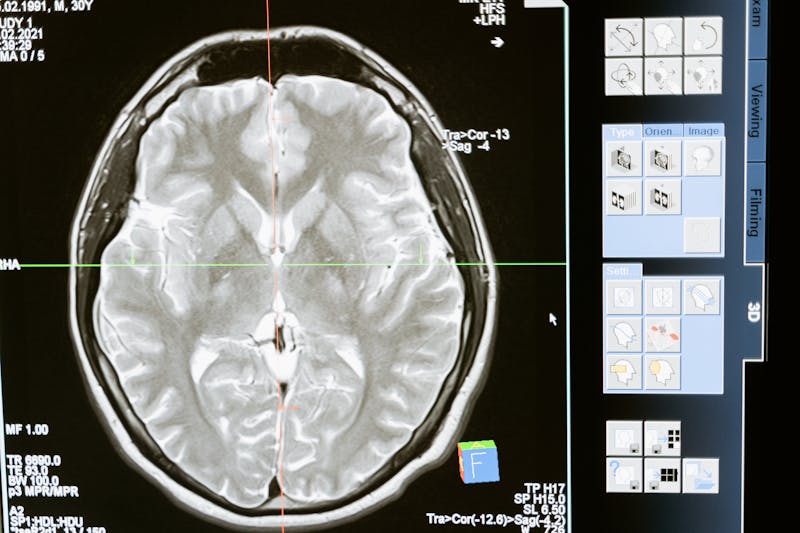
In India, where there is roughly one doctor per 1,500 people (compared to one per 300 in the US), AI diagnostic tools are filling a critical gap. Google Health’s DermAssist analyses skin conditions with 80%+ accuracy across diverse skin tones. PathAI’s tools help pathologists identify cancer in tissue samples 25% more accurately than manual review alone. AI-powered ultrasound devices from Butterfly Network put diagnostic imaging in the hands of community health workers with minimal training.
The TB story is particularly striking. Tuberculosis kills 1.3 million people annually, mostly in developing countries where diagnosis depends on chest X-rays read by overworked technicians. AI systems from Qure.ai and Lunit now read TB X-rays with sensitivity exceeding 95% — matching or outperforming experienced radiologists. In a 2025 pilot across 500 Indian clinics, AI-assisted screening identified 40,000 TB cases that would have been missed by human readers, leading to treatment that likely prevented tens of thousands of deaths.
Key deployments in 2026
| Application | Organisation | Impact | Scale |
|---|---|---|---|
| TB screening | Qure.ai, Lunit | 40,000+ missed cases found in India alone | 30+ countries |
| Deforestation detection | Global Forest Watch, Planet Labs | 12M hectares of forest protected | Global satellite coverage |
| Flood early warning | Google Flood Hub | 5–7 day advance warnings | 80+ countries, 460M people |
| Crop disease detection | PlantVillage, Plantix | 20–30% yield improvement | 35M+ farmers using apps |
| Wildlife anti-poaching | PAWS Protection Assistant | 30% more effective ranger patrols | National parks across Africa and Asia |
Environmental monitoring at planetary scale
Planet Labs operates over 200 Earth-observation satellites that photograph every point on the planet’s surface daily. Machine learning models trained to recognise deforestation patterns, illegal mining operations, methane leaks, and wildfire ignition points can process the entire planet’s imagery in hours, flagging areas for human review and enforcement action.
Brazil’s DETER-B system enabled a 22% reduction in Amazon deforestation in 2025 by alerting enforcement teams to illegal clearing in near real-time. Global Fishing Watch tracks 60,000+ fishing vessels via satellite, identifying illegal fishing in marine protected areas. And methane detection AI from Kayrros and GHGSat pinpoints industrial leaks from space — information that oil and gas companies previously had no way to monitor and environmental regulators had no way to verify.

The uncomfortable tensions
AI for good isn’t uncomplicated. The same facial recognition technology that helps find missing children can enable mass surveillance. The same language models that translate educational materials into local languages can generate misinformation at scale. And AI systems trained on biased data — which is most AI systems — can perpetuate the very inequalities they’re supposed to address. A healthcare AI trained primarily on data from white patients may perform poorly on darker skin tones.
The organisations doing this work responsibly — Google.org, the Patrick J. McGovern Foundation, AI for Good Foundation — invest heavily in local partnerships, diverse training data, and ongoing validation. The lesson from 2026 is that AI can be an extraordinarily powerful tool for human welfare — but only when deployed with the same rigour, humility, and accountability we demand from any other intervention in people’s lives. The pressure to deploy fast and show impact sometimes conflicts with the slower work of getting it right. That tension deserves more honest discussion than it gets.
