
CRISPR in 2026: The Gene Editing Revolution Is Here — But Can Everyone Afford It?
In December 2023, the FDA approved the first CRISPR-based therapy for sickle cell disease — a milestone scientists had been working toward for more than a decade. Over 200 patients have since received the treatment, called Casgevy, and the results are striking: 95% have been free of the severe pain crises that define the disease. Some describe the experience as getting their lives back.
That approval cracked open the floodgates. In 2026, CRISPR-based therapies are in clinical trials for more than 40 diseases. The science is moving fast. The question isn’t whether gene editing will transform medicine — it already is. The questions are who gets access, what it costs, and where the ethical boundaries lie.
How CRISPR actually works
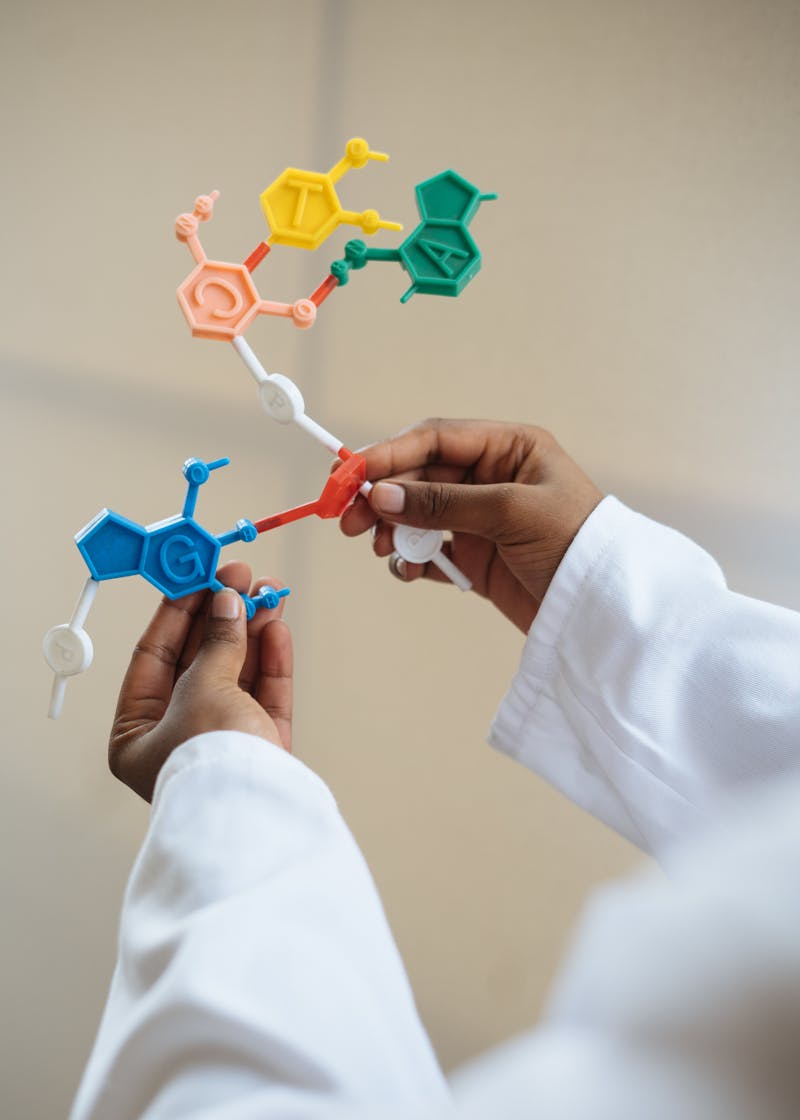
CRISPR is essentially a pair of molecular scissors guided by GPS. A guide RNA molecule matches a specific DNA sequence — the gene you want to edit. The Cas9 protein cuts the DNA at precisely that location. The cell’s own repair machinery fixes the cut, either disabling the faulty gene or inserting a corrected version. The elegance is its programmability: by changing the guide RNA sequence, scientists can target virtually any gene in any organism.
What’s changed since CRISPR’s early days is precision. First-generation Cas9 sometimes cut in the wrong places. Newer variants — base editing and prime editing, developed by David Liu’s lab at the Broad Institute — can change individual DNA letters without cutting both strands of the double helix, dramatically reducing the risk of unintended edits. These refined tools are enabling clinical applications that would have been too risky with the original system.
Where things stand in 2026
| Disease | Company | Status | Early results |
|---|---|---|---|
| Sickle cell disease | Vertex / CRISPR Therapeutics | FDA approved Dec 2023 | 95% free of pain crises |
| Beta-thalassemia | Vertex / CRISPR Therapeutics | FDA approved June 2024 | Transfusion independence |
| Hereditary angioedema | Intellia Therapeutics | Phase 3 trials | 95% reduction in attacks |
| Leber congenital amaurosis | Editas Medicine | Phase 2 trials | Vision improvement in subset |
| Cancer (CAR-T enhancement) | Caribou Biosciences | Phase 1–2 trials | Improved response vs standard CAR-T |
The $2.2 million problem
Casgevy’s list price is $2.2 million per patient. That number reflects the extraordinary complexity of the current treatment process: extract the patient’s stem cells, ship them to a specialised lab, edit them over several weeks, quality-check the results, then infuse them back after chemotherapy conditioning. The entire process takes months and requires specialised medical centres.
At $2.2 million, Casgevy is cost-effective compared to a lifetime of sickle cell treatment (estimated $4–6 million per patient in the US). But “cost-effective” and “accessible” are not the same thing. Insurance companies are still figuring out how to cover gene therapies. And in developing countries where sickle cell disease is most prevalent — sub-Saharan Africa, India, the Middle East — a $2.2 million therapy is simply out of reach.
The industry’s answer is scale and in-vivo delivery. In-vivo therapies — where the CRISPR tool is injected directly into the patient, skipping cell extraction entirely — could reduce costs dramatically. Intellia’s in-vivo approach for hereditary angioedema is the proof-of-concept that could make CRISPR accessible at a fraction of current costs.
The ethical line
Everything above involves somatic cell editing — changes that affect only the patient and aren’t passed to future generations. This is broadly accepted as ethical when the disease is serious and the treatment is safe. The controversy centres on germline editing — changes to embryos inherited by all future descendants. This has been effectively banned worldwide since He Jiankui’s rogue experiment in 2018, when he secretly edited the genomes of twin girls in China. He was imprisoned; the international scientific community imposed a moratorium.
But the moratorium is under pressure. In 2025, prominent scientists published a letter in Nature calling for a “responsible pathway” to germline editing for conditions like Huntington’s and Tay-Sachs — where every child of an affected parent has a 50% chance of inheriting a devastating, untreatable illness. The counterargument: once we start editing the human germline, the line between preventing disease and enhancing traits becomes blurry very quickly. This debate will define bioethics for a generation. In 2026, the technology to edit human embryos safely is closer than most people realise. Whether we should — and who gets to decide — is one of the most consequential questions humanity faces.
