
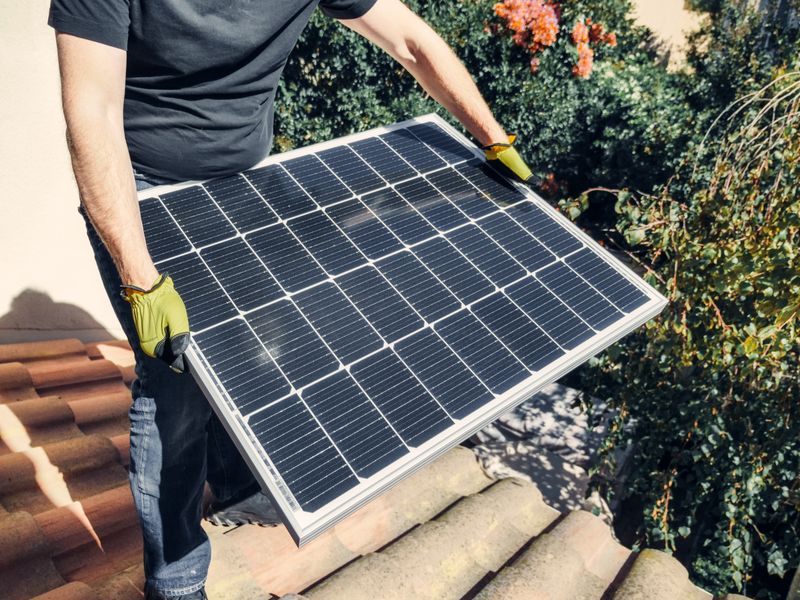
Home Solar Panels in 2026: Real Costs, Savings, and Who Should Actually Buy Them
Home Solar Panels in 2026: Real Costs, Savings, and Who Should Actually Buy Them
nnHome solar has crossed the financial tipping point. The average US home solar installation now pays back in 6-9 years — down from 12-15 years a decade ago — and provides 20-25 years of essentially free electricity afterward. The federal Investment Tax Credit (ITC) at 30% remains in effect through 2032. And solar panel costs have fallen 90% since 2010, with continued decline in 2026 driven by manufacturing scale and improved panel efficiency.
The financial case is real, but it’s not universal. Solar works best for homeowners with high electricity bills, adequate roof space with good sun exposure, and plans to stay in the property long enough to recoup the installation cost. It works poorly for renters, homeowners with heavily shaded roofs, or those planning to move within five years. Understanding these conditions before committing prevents expensive mistakes.
The numbers: what solar actually costs and saves in 2026
The average US home solar installation in 2026 costs $25,000-35,000 before incentives for a 8-10kW system. After the 30% federal ITC, net cost drops to $17,500-24,500. Many states add additional incentives — California’s SGIP battery incentive, New York’s state tax credit, and numerous utility rebates can reduce net cost by another 10-30%.
The savings side: a 10kW system generates roughly 12,000-14,000 kWh per year in an average US climate (more in the Southwest, less in the Pacific Northwest). At the average US retail electricity rate of $0.18/kWh, that’s $2,160-2,520 in annual savings. At a net installed cost of $20,000 after incentives, the simple payback period is 8-9 years. Over the 25-year warranty period, that system generates roughly $50,000-60,000 in electricity value — $30,000-40,000 in net profit after installation cost.

Should you add a battery? The Tesla Powerwall vs alternatives
| Battery | Capacity | Cost (installed) | Best for |
|---|---|---|---|
| Tesla Powerwall 3 | 13.5 kWh | $11,500 | Grid backup, time-of-use optimization |
| Enphase IQ Battery 5P | 5 kWh (stackable) | $7,500/unit | Flexible sizing, Enphase solar |
| Franklin WH 5.48 | 5.48 kWh | $8,000 | Budget battery option |
| No battery | — | $0 | Net metering markets, short payback |
Battery storage is optional and sometimes not financially justified. In markets with full retail net metering (where your utility buys back excess solar at retail rates), a battery adds cost without proportional financial benefit — the grid acts as your free battery. Batteries make financial sense primarily in markets with time-of-use rates (where electricity costs more at peak times), limited net metering, or frequent power outages where backup power has real value.
How to evaluate a solar quote
The solar industry has a well-documented problem with misleading quotes. Reputable installers provide: a system design based on your actual annual electricity consumption (from your utility bills, not an estimate), realistic production estimates using NREL PVWatts data for your specific location and roof orientation, clear payback period calculations using your actual electricity rate, and disclosure of any escalator clauses in loan or lease agreements.
Red flags: installers who can’t or won’t provide their license and insurance documentation, quotes that don’t include permitting costs, production guarantees that aren’t backed by specific performance data, and pressure to sign same-day. Get at least three quotes. The variation between solar installers is significant — the same system from different installers can vary by $5,000-8,000. Use EnergySage’s marketplace to get multiple verified quotes without cold calls.

Leases, loans, and cash: which financing makes sense
Cash purchase delivers the highest return — you capture the full 30% ITC and all electricity savings. Solar loans allow you to capture the same financial benefits without upfront capital, at the cost of loan interest. Solar leases and PPAs (power purchase agreements) transfer ownership to the installer — you pay a monthly rate for electricity, capture none of the tax benefits, and may face complications when selling your home. For most homeowners who can qualify for a solar loan, owned systems significantly outperform leases over the system lifetime.
