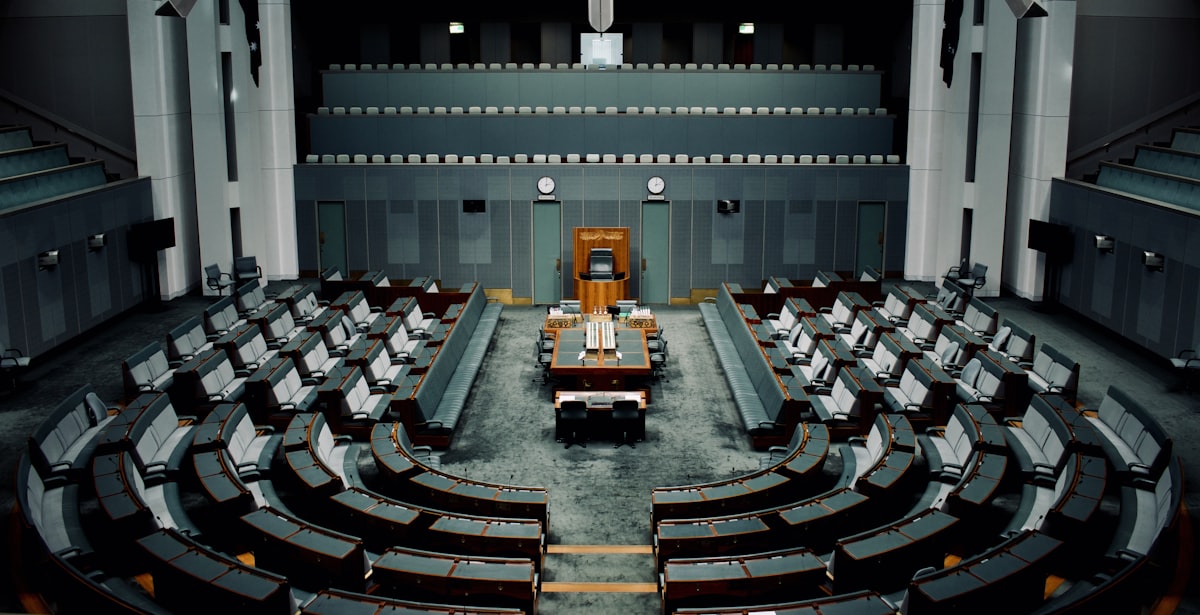
The US Senate passed the AI Accountability Act on Tuesday with a 67-31 bipartisan vote, sending the legislation to the House of Representatives where leadership has indicated it will receive a floor vote before the end of September. If signed into law, the bill would establish the first binding federal requirements for AI transparency and safety testing in the United States, a milestone that lawmakers and industry observers have described as long overdue given the pace of AI deployment across the economy.
The legislation requires AI companies to publicly disclose the categories of data used to train commercial AI models, conduct standardised bias evaluations before releasing systems to the public, and submit safety assessments to a newly created federal registry maintained by the National Institute of Standards and Technology. The registry will be publicly accessible, allowing researchers, journalists, and civil society organisations to review submitted assessments.
Scope and penalties
The bill applies to AI systems with more than 100 million users or those deployed in high-stakes domains including hiring and promotion decisions, credit and lending assessments, healthcare diagnosis and treatment recommendations, and criminal justice risk scoring. Companies that deploy AI in these domains without completing the required evaluations face civil penalties of up to $15 million per violation, with repeat violations subject to higher fines and mandatory third-party audits funded by the company.
Smaller companies deploying AI in non-high-stakes contexts are not subject to the evaluation requirements, though they must still maintain documentation of their training data categories and make it available to regulators upon request. The threshold was set after intensive lobbying from startup industry groups who argued that the original bill’s requirements would impose costs that only large incumbents could absorb, entrenching the market positions of established players.

Open-source exemption and controversy
One of the most debated provisions is an exemption for open-source models released under qualifying licences. The exemption means that models like Meta’s Llama series, which are publicly released under open licences, would not be subject to the pre-deployment evaluation requirements even if they are used at scale by third parties. An amendment introduced by Senator Maria Cantwell to close the exemption was defeated 44-54, with most Republican senators and several Democrats from technology-heavy states voting against it.
Critics of the exemption argue it creates a straightforward path to regulatory avoidance: a company could release a powerful model as open-source, exempting it from evaluation requirements, while still profiting from enterprise services built on top of it. Supporters counter that open-source models are already publicly inspectable by researchers and that applying evaluation requirements to open-source releases would effectively end US participation in the global open-source AI ecosystem.
Industry and White House responses
Major AI companies responded cautiously. Microsoft and Google issued statements expressing support for the legislation’s intent while flagging concerns about implementation timelines — specifically, that the 18-month compliance window after enactment may be too short for companies with large existing model portfolios. Anthropic issued a more direct statement of support, describing the safety evaluation requirements as consistent with the company’s existing internal practices. Meta did not issue a public statement.
The White House indicated the President is expected to sign the bill if it passes the House without major amendments. The EU AI Act, which entered enforcement for high-risk systems in August 2026 following a two-year implementation period, has served as a reference point for several provisions in the American legislation, though the US bill differs significantly in structure — favouring transparency disclosure over categorical prohibition.
